About San Diego Epoxy & Concrete
We install premium epoxy and concrete coatings for homes and businesses across San Diego, with the prep done properly and each system chosen for the floor in front of us.
- Free on-site estimateMoisture test included
- Diamond-ground prepBonds into the slab
- UV-stable topcoatsBuilt for coastal sun
- Carlsbad to CoronadoService area
Coatings and concrete finishes for San Diego homes and businesses
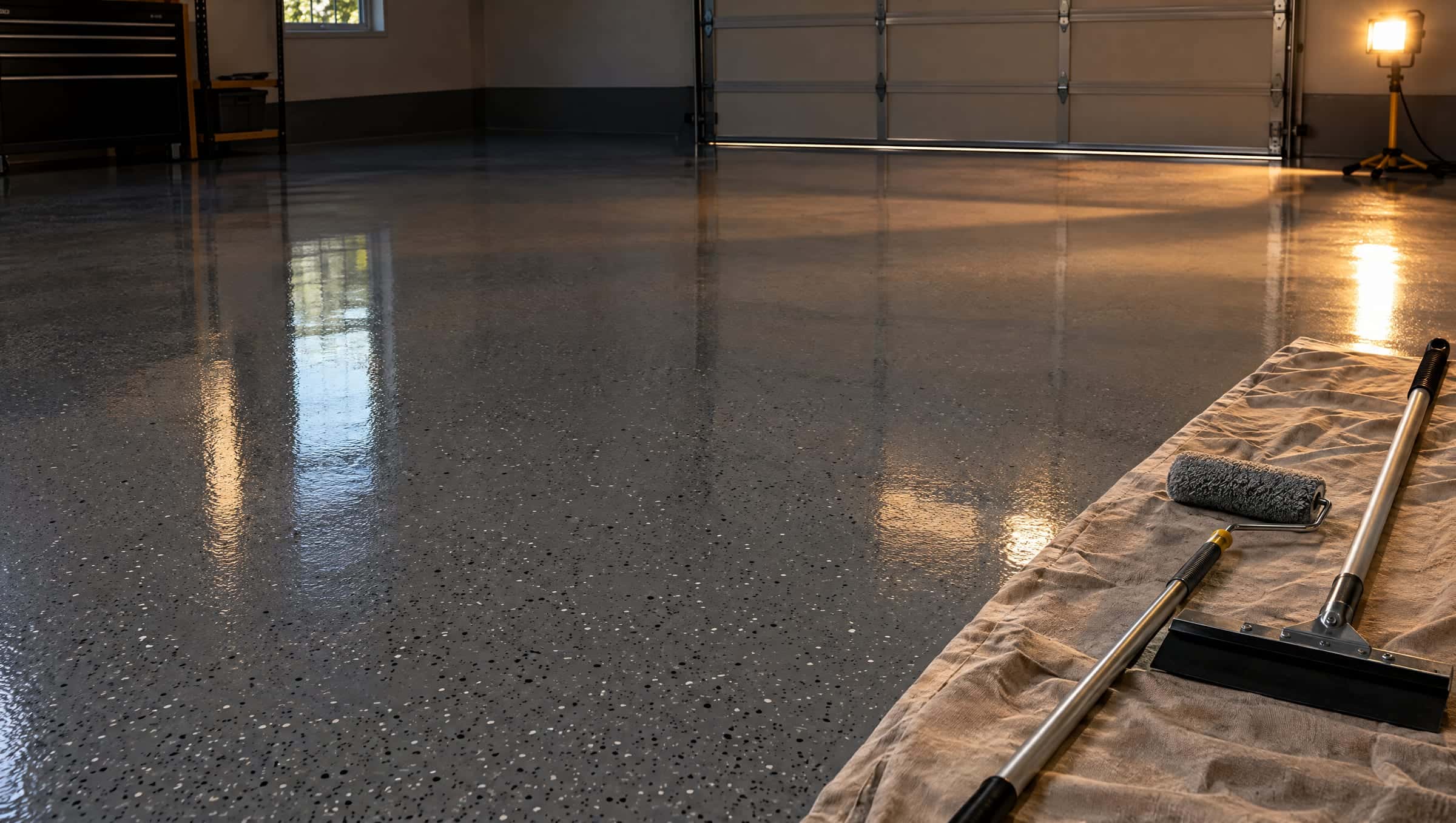
San Diego Epoxy & Concrete installs floor coatings and concrete finishes: garage floor epoxy, flake and polyaspartic systems, metallic epoxy, commercial epoxy, concrete polishing, and resurfacing for patios, walkways and pool decks. Garages are the most common project, but the same systems belong in basements, home gyms, studios, showrooms, shops and commercial kitchens.
We work for homeowners who want a floor that looks finished and stays that way, and for business owners who need a surface that handles traffic, chemicals and daily cleaning. Both want the same thing: a floor that is still bonded, clean and good-looking years from now.
The standards behind every floor
Moisture testing first
We test slabs for moisture vapor before recommending a system, using a calcium chloride test or a relative humidity probe. High readings mean a moisture-mitigating primer goes down first.
Diamond grinding, not acid etching
Grinding opens the concrete to a consistent profile, typically CSP 2 to 3, so the base coat bonds into the slab. Acid etching is faster and cheaper, and it is behind many peeling floors.
Repairs before coating
Cracks, spalls and pitting are filled with polyurea or epoxy repair material and ground flush, so they do not show through the finish or become weak points.
Real film build
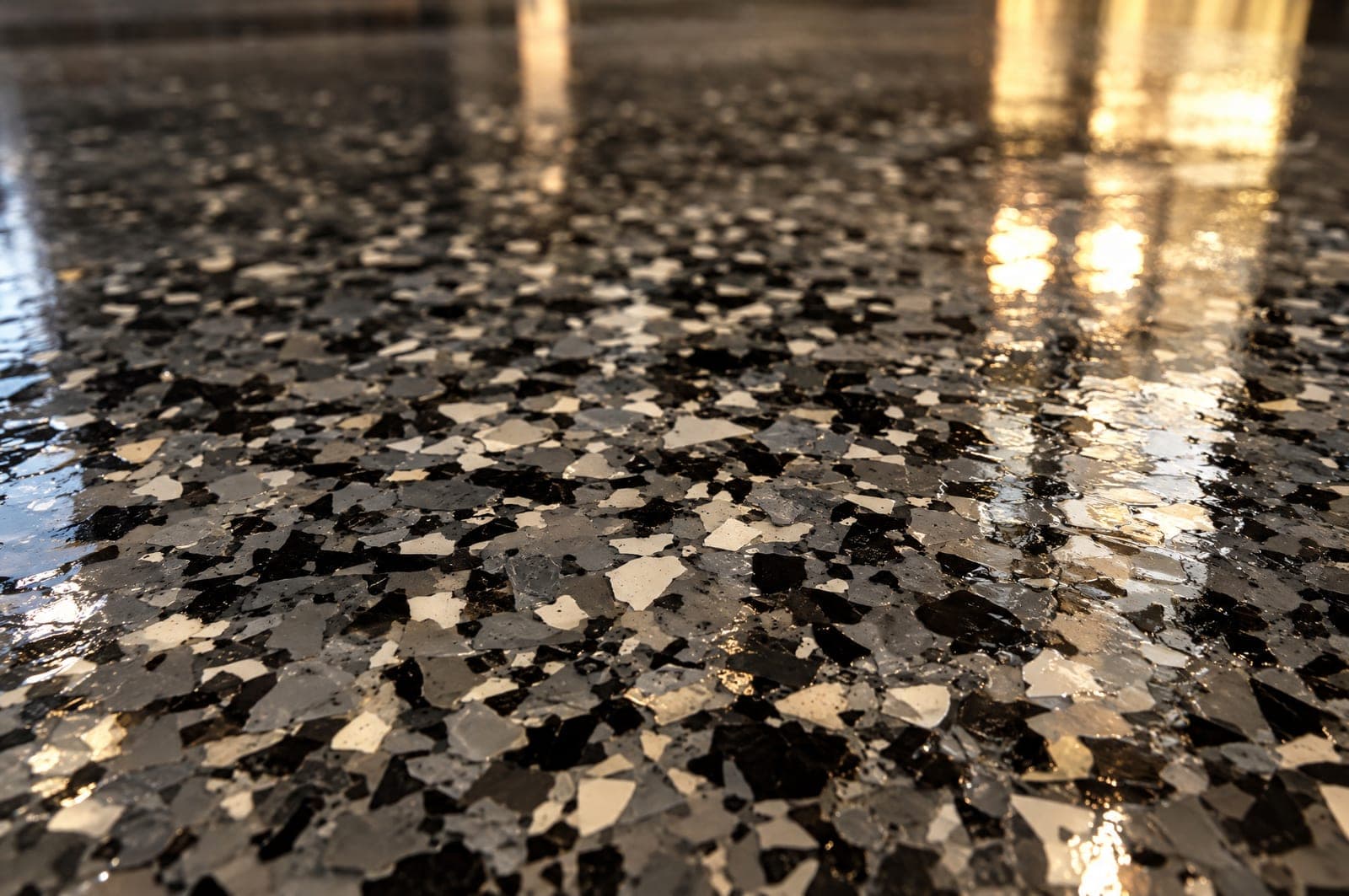
We use 100% solids epoxy or polyurea base coats and full-broadcast flake, giving the system the thickness to resist abrasion, dropped tools and hot-tire pickup.
UV-stable topcoats
Garages and outdoor floors get a polyaspartic or polyurea topcoat that holds its color in San Diego sun. Plain epoxy stays indoors or under a UV-stable top.
Clear written estimates
Each estimate names the system, the prep, the number of coats and the expected return-to-service time, so you can compare quotes line by line.
Honest recommendations, including when not to coat
Every recommendation starts with the slab and how the space is used. A west-facing garage in Coronado needs a UV-stable topcoat. A basement on a damp slab needs a moisture-mitigating primer. A living room on sound concrete may not need a coating at all.
Sometimes the right answer is not epoxy. Polishing can outlast any coating on a sound interior slab, and a resurfacing overlay is often the better fix for a tired patio or pool deck. We explain the trade-offs in plain terms, price the options side by side and let you decide.
Days, cure times and access
A residential garage typically takes one to three days, depending on the system, the size and how much repair the slab needs. The first day is usually grinding, repairs and the base coat. Fast-curing polyaspartic systems can often be completed in a day, while epoxy-based systems typically need a second visit for the topcoat.
Plan to empty the space beforehand. Grinding is loud, and we run dust collection to keep the work clean. Foot traffic typically returns within about a day. Vehicles typically wait 24 to 48 hours on polyaspartic and 3 to 7 days on epoxy, and your estimate states the cure times for your specific system.
Central and coastal San Diego
We serve the City of San Diego and the coast, including La Jolla, Carmel Valley, Del Mar and Solana Beach, Rancho Santa Fe, Encinitas, Carlsbad, Coronado and Point Loma. If you are elsewhere in San Diego, ask. We will tell you plainly whether we can take the job.
How an install works
- 01
Inspection and moisture test
We walk the space, measure it, and look closely at the slab: cracks, spalls, old coatings, oil stains and drainage. Then we test for moisture vapor with a calcium chloride test or a relative humidity probe. The results decide the system, the primer and the prep, and they go into your written estimate.
- 02
Diamond grinding and surface prep
We grind the concrete with diamond tooling and dust collection to a consistent profile, typically CSP 2 to 3, about the feel of medium sandpaper. Grinding removes weak surface paste, old sealers and contamination, so the base coat bonds into the slab instead of sitting on top of it.
- 03
Crack and spall repair
Cracks, chips, spalls and pitting are filled with a polyurea or epoxy repair material and ground flush with the floor. Control joints are cleaned out and either filled or kept open, depending on the system. Repairs stop defects from showing through the finish and remove weak points where a coating could lift.
- 04
Base coat and broadcast
The base coat goes down: 100% solids epoxy, polyurea, or a moisture-mitigating primer where testing called for one. Flake floors get color chips broadcast to full coverage. Metallic floors get pigments worked by hand. Commercial floors may get a quartz broadcast. Loose material is scraped and vacuumed once the base cures.
- 05
UV-stable topcoat, cure and return to service
A clear polyaspartic or polyurea topcoat seals the floor, sets the sheen and resists UV yellowing, with slip-resistant texture available. Foot traffic typically returns within about 24 hours. Vehicles typically wait 24 to 48 hours on polyaspartic systems and 3 to 7 days on epoxy, depending on product and temperature.
About us
Get a free estimate
Send a few details about your floor and we will schedule an on-site inspection and moisture test, then give you a written estimate with system options explained in plain terms.