Concrete Polishing in San Diego
We grind and polish the slab itself through a sequence of diamond abrasives, then densify and guard it, for a hard, low-maintenance floor from soft matte to high gloss.
- Free on-site estimateMoisture test included
- Diamond-ground prepBonds into the slab
- UV-stable topcoatsBuilt for coastal sun
- Carlsbad to CoronadoService area
About concrete polishing
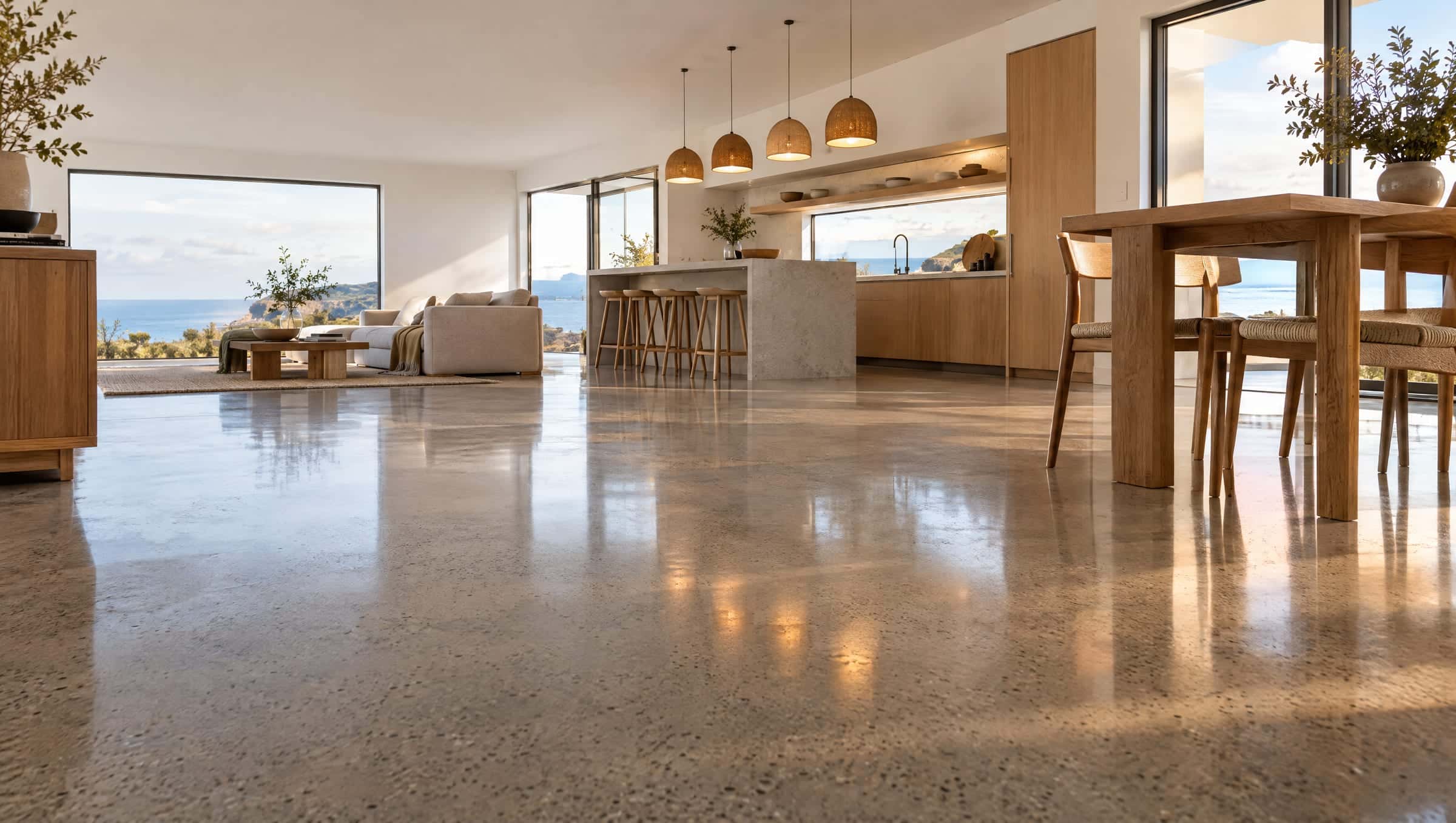
Concrete polishing in San Diego turns the slab you already have into the finished floor. We grind it flat with metal-bond diamonds, refine it through progressively finer resin-bond diamonds, harden it with a penetrating densifier, and finish with a guard that resists stains. There is no thick coating on top to peel or yellow.
Polished concrete suits modern interiors, ADUs, garages, showrooms, retail floors, and warehouses: anywhere you want a durable, reflective floor with simple upkeep. You choose the sheen, from a soft matte to high gloss, and how much of the stone inside the concrete shows, from a smooth cream finish to fully exposed aggregate.
It is also honest about the slab underneath. Patches, old adhesive shadows, and cracks stay visible, and every slab polishes a little differently. We walk the floor with you and set expectations before the first pass.
Why homeowners and businesses choose it
The floor is the slab
Polishing removes material instead of adding it. The densifier reacts inside the concrete to harden the surface, so there is no film to delaminate, scuff through, or yellow in the sun. For homes and ADUs built on exposed slabs, that means a finished floor with no floor covering on top.
Low maintenance by design
A dense, polished surface sheds dust and wipes clean. Daily care is a dry dust mop; regular cleaning is a neutral-pH cleaner, never vinegar or harsh acids. In retail and warehouse spaces, an auto-scrubber keeps it bright, and an occasional re-burnish or fresh guard restores sheen in the traffic lanes.
Concrete grinding, not only polishing
Not every floor needs a high polish. Concrete grinding alone can flatten uneven spots, remove old coatings and carpet glue, and open the surface for a new system. Many projects stop at a honed, matte finish; others continue to a semi-polish or high gloss. We scope the work to the look and use you want.
A look for modern and commercial spaces
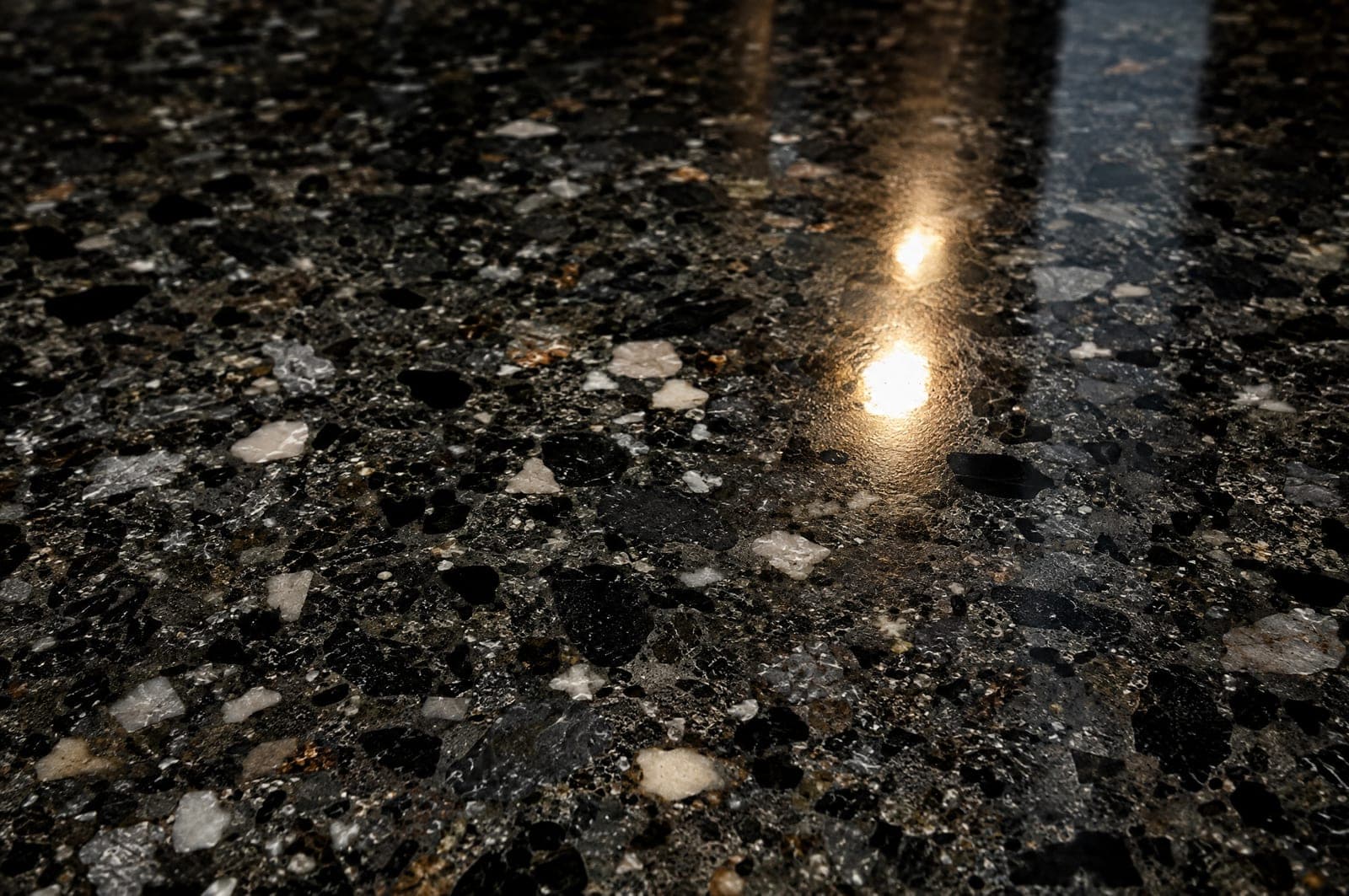
Polished concrete floors read as quiet and architectural: soft reflections in a living room, crisp light in a showroom, bright and durable in a warehouse. Salt-and-pepper aggregate gives a fine speckled look, while a cream finish stays smooth and uniform. Dyes add color where the floor is shielded from direct sun.
What goes into the system
| Spec | Typical |
|---|---|
| Grinding sequence | Metal-bond diamonds to flatten and open the slab, then resin-bond diamonds in progressively finer grits |
| Hardening | Penetrating densifier, commonly lithium silicate, applied partway through the sequence |
| Protection | Penetrating stain guard, burnished in after the final polish |
| Sheen levels | Matte (ground or honed), satin, semi-polished, or high gloss |
| Aggregate exposure | Cream (minimal), salt and pepper (fine aggregate, typically a shallow cut of about 1/16 inch), or medium to large aggregate (deeper cuts, typically about 1/8 to 1/4 inch) |
| Added thickness | None; the slab itself becomes the finished floor |
| Return to service | Usually walkable soon after the final pass; the guard typically needs a few hours to dry |
Sheen and aggregate exposure depend on the slab: its hardness, flatness, and how the concrete was originally finished. When the look matters, we can polish a small test area so you see your slab's result before committing to the full floor.
How we install it
- 01
Inspection and moisture test
We walk the space, measure it, and look closely at the slab: cracks, spalls, old coatings, oil stains and drainage. Then we test for moisture vapor with a calcium chloride test or a relative humidity probe. The results decide the system, the primer and the prep, and they go into your written estimate.
- 02
Diamond grinding and surface prep
We grind the concrete with diamond tooling and dust collection to a consistent profile, typically CSP 2 to 3, about the feel of medium sandpaper. Grinding removes weak surface paste, old sealers and contamination, so the base coat bonds into the slab instead of sitting on top of it.
- 03
Crack and spall repair
Cracks, chips, spalls and pitting are filled with a polyurea or epoxy repair material and ground flush with the floor. Control joints are cleaned out and either filled or kept open, depending on the system. Repairs stop defects from showing through the finish and remove weak points where a coating could lift.
- 04
Base coat and broadcast
The base coat goes down: 100% solids epoxy, polyurea, or a moisture-mitigating primer where testing called for one. Flake floors get color chips broadcast to full coverage. Metallic floors get pigments worked by hand. Commercial floors may get a quartz broadcast. Loose material is scraped and vacuumed once the base cures.
- 05
UV-stable topcoat, cure and return to service
A clear polyaspartic or polyurea topcoat seals the floor, sets the sheen and resists UV yellowing, with slip-resistant texture available. Foot traffic typically returns within about 24 hours. Vehicles typically wait 24 to 48 hours on polyaspartic systems and 3 to 7 days on epoxy, depending on product and temperature.
- Polishing replaces the coating steps with abrasive passes. After inspection and crack repair, diamond grinding continues through the full grit sequence instead of stopping at a coating profile, with densifier applied along the way and a burnished guard in place of a topcoat.
- Because polishing adds no film, slab moisture is less of a delamination risk than it is under a coating. We still check for moisture, old adhesives, and coatings, since residue has to come off and can leave shadows in the finished floor.
- Cracks and joints are filled with a semi-rigid filler, typically a polyurea, in a matching or neutral tone to protect their edges. They remain visible as lines in the polished floor.
Built for coastal sun, salt air, and moisture
Coastal sand and grit
Near the beach, sand rides in on shoes, paws, and pool towels. Sand acts like sandpaper on any polished surface and dulls the sheen along traffic paths. A walk-off mat at each entry and a daily dust mop do most of the protecting, and periodic re-burnishing brings high-traffic lanes back.
Concrete polishing in San Diego's coastal humidity
Coastal humidity and moisture vapor rising through slabs on grade are what cause many coatings to blister and lift. A polished floor has no film to lift, which makes it a practical option in older coastal homes where vapor is a concern. Damp slabs can still show darker patches or efflorescence, so we read the slab before starting.
Strong sun through big windows
San Diego's year-round sun pours through the large glazing common in modern homes and showrooms. Natural gray concrete handles it well, but some concrete dyes fade in direct UV. In sunlit rooms we favor natural tones or dyes rated as UV-stable, and we talk through how window film or shading affects color over time.
Polished concrete vs. epoxy coating
| Polished concrete | Epoxy coating | |
|---|---|---|
| What it is | The slab itself, ground, densified, and polished | A resin layer bonded on top of the slab |
| Look | Natural concrete, cream to exposed aggregate, matte to high gloss | Solid color, flake, or metallic that covers the slab |
| Slab flaws | Patches, stains, and cracks stay visible | Covers most stains and repairs |
| Stains and chemicals | Densified and guarded but still porous; acids and oil can mark it | Nonporous; strong chemical resistance with the right system |
| Slab moisture | No film to delaminate | Needs moisture testing and sometimes a mitigating primer |
| Downtime | Usually walkable soon after the final pass | Typically about a day for foot traffic, several days for vehicles |
| Upkeep | Dust mop, neutral cleaner, occasional re-burnish | Mild cleaner; topcoat renewed when it wears |
What concrete polishing costs in San Diego
Polishing cost is driven by square footage, slab condition, how much grinding your chosen sheen and aggregate exposure require, crack and joint filling, and any dye. Our cost guide covers how typical San Diego pricing is built, and we price polishing after walking the slab.
Concrete Polishing questions
Compare other floor systems
Commercial Epoxy Flooring
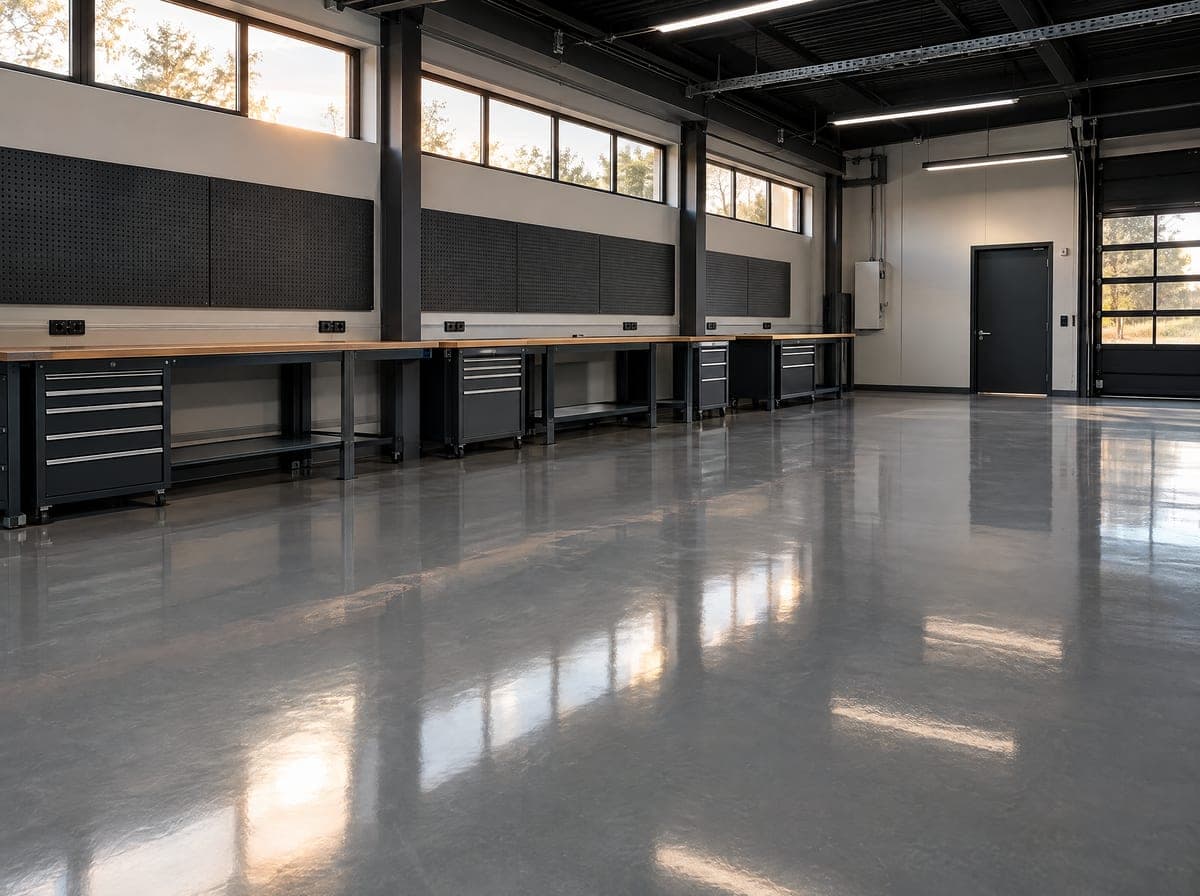
Epoxy, quartz, and urethane cement floor systems for warehouses, showrooms, retail, kitchens, breweries, and labs, chosen for traffic, chemicals, and cleaning.
Learn more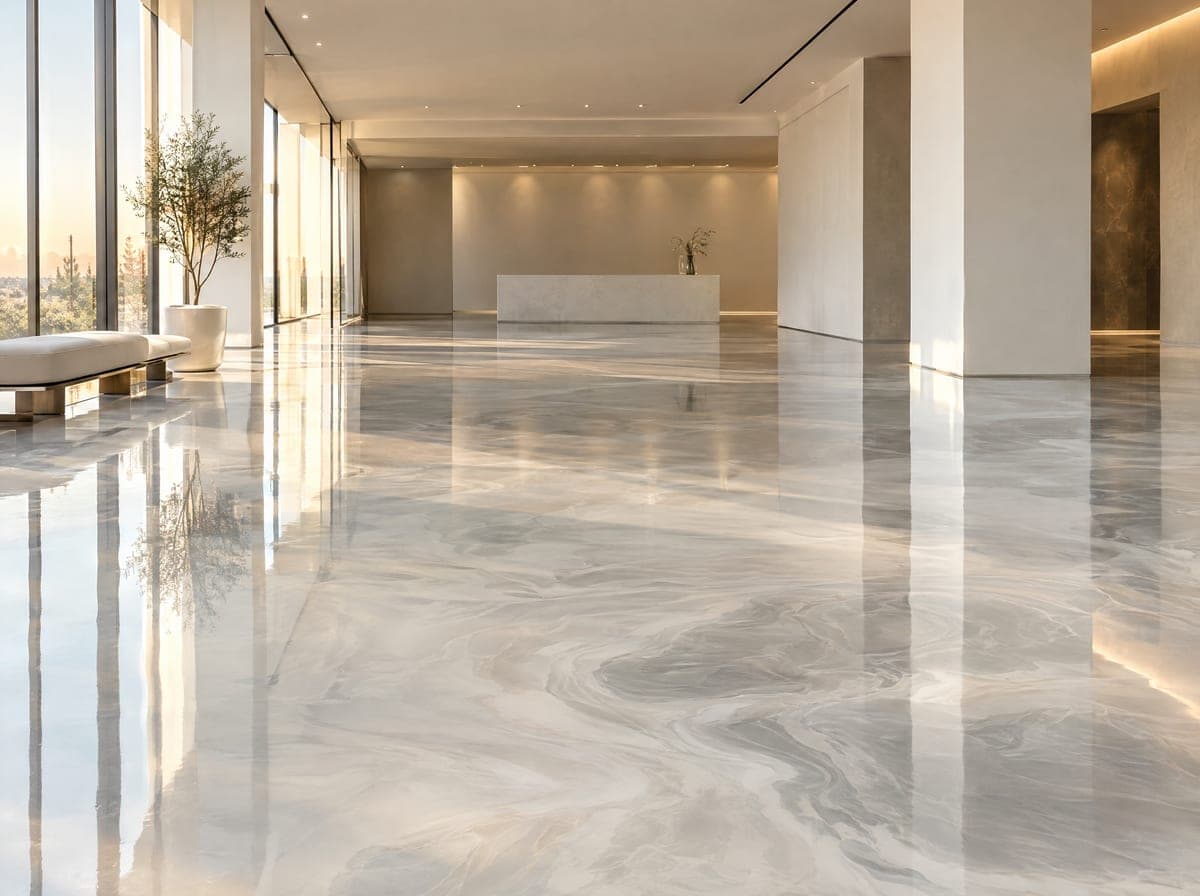
Metallic Epoxy Floors
Hand-worked metallic epoxy with pearlescent depth and movement, sealed under a clear topcoat. A one-of-a-kind floor for interiors, showrooms, studios, and showcase garages.
Learn more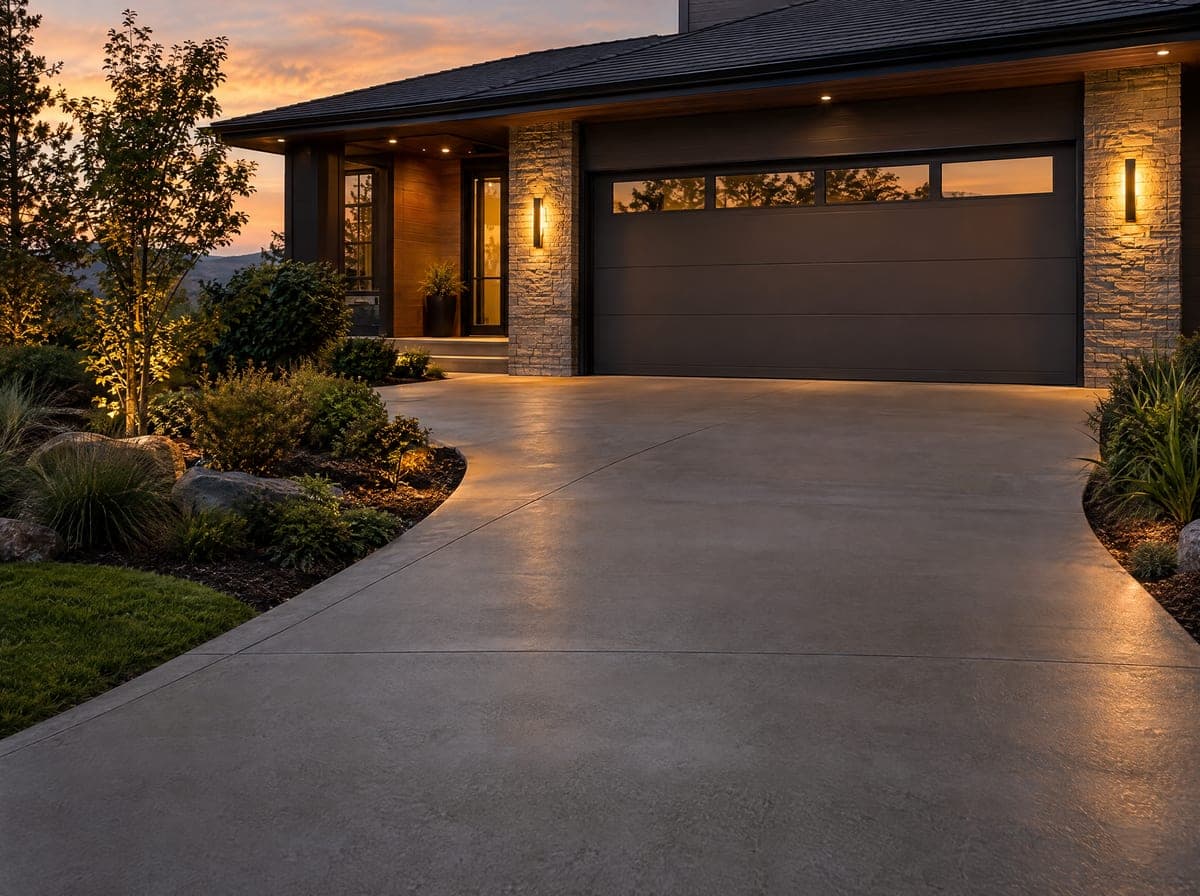
Concrete Resurfacing
Bonded cement overlays, knockdown textures, and sealers that renew sound but worn patios, driveways, walkways, and garage slabs without tear-out.
Learn moreConcrete Polishing across San Diego
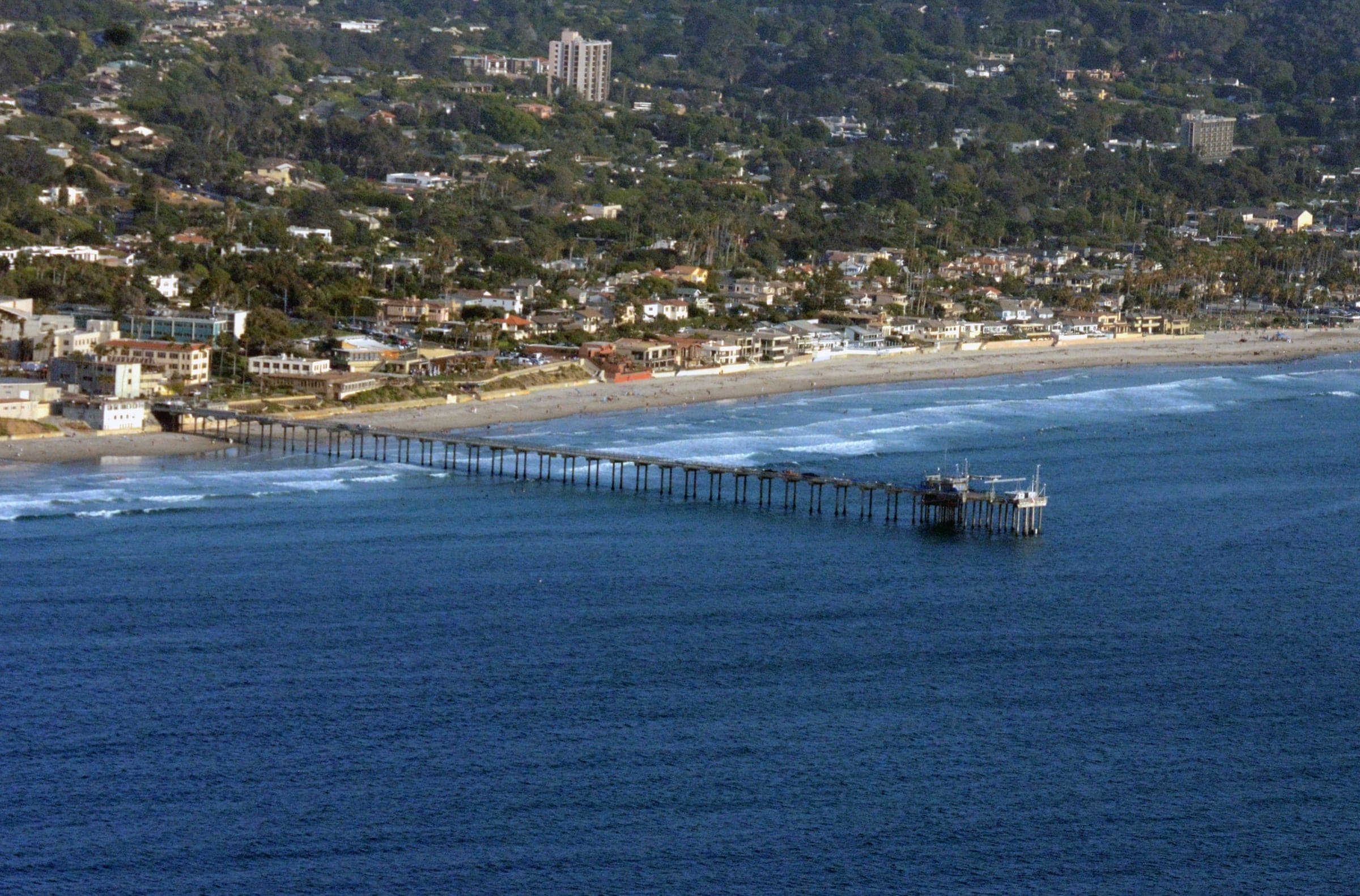
La Jolla
Garage floor epoxy and polyaspartic coatings for La Jolla homes, built for salt air, marine-layer mornings and strong coastal sun, from Bird Rock to La Jolla Farms.
Epoxy floors in La Jolla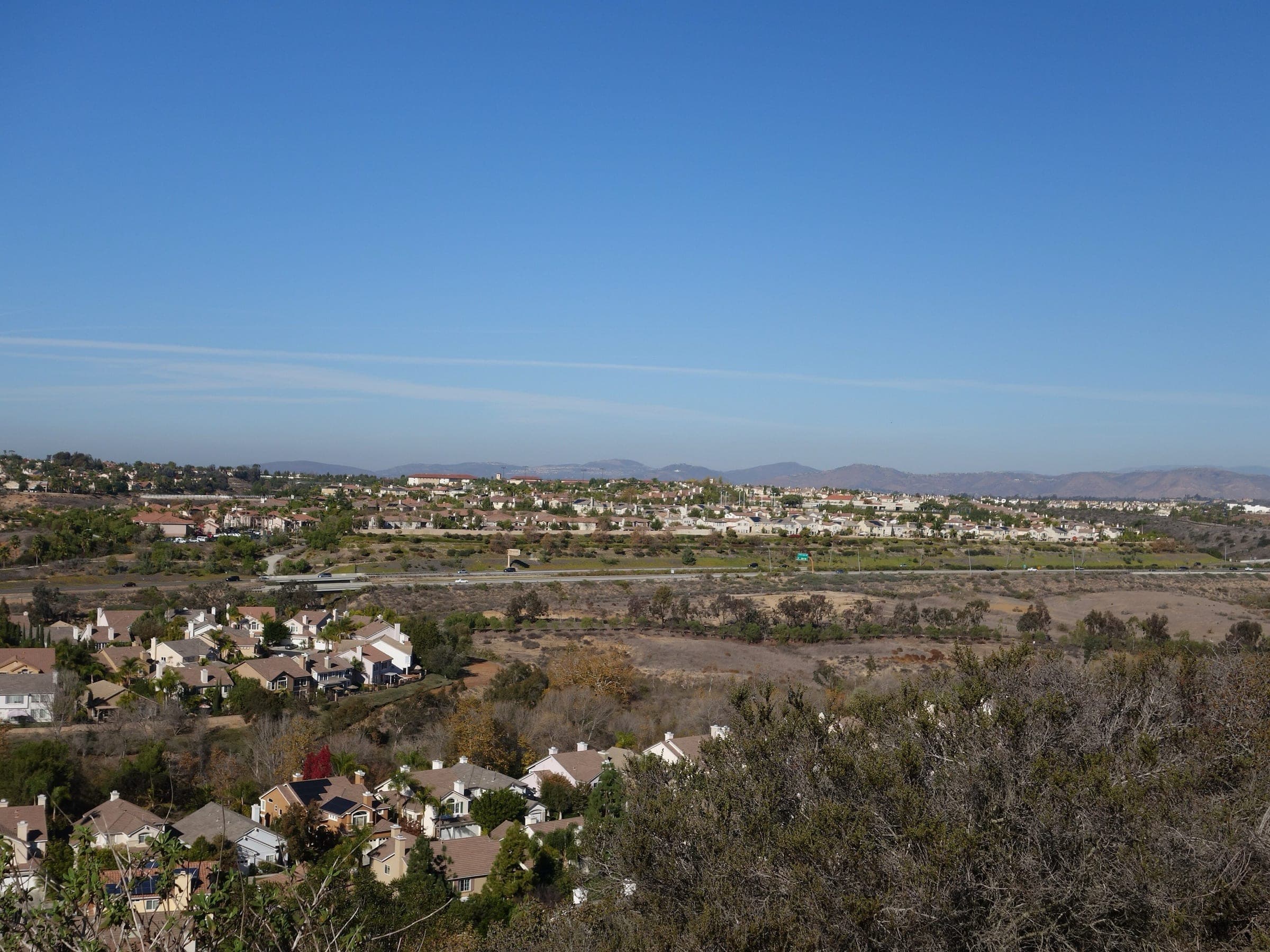
Carmel Valley
Flake and polyaspartic garage coatings for Carmel Valley, Pacific Highlands Ranch and Torrey Hills homes, with full removal of old coatings and HOA submittal support.
Epoxy floors in Carmel Valley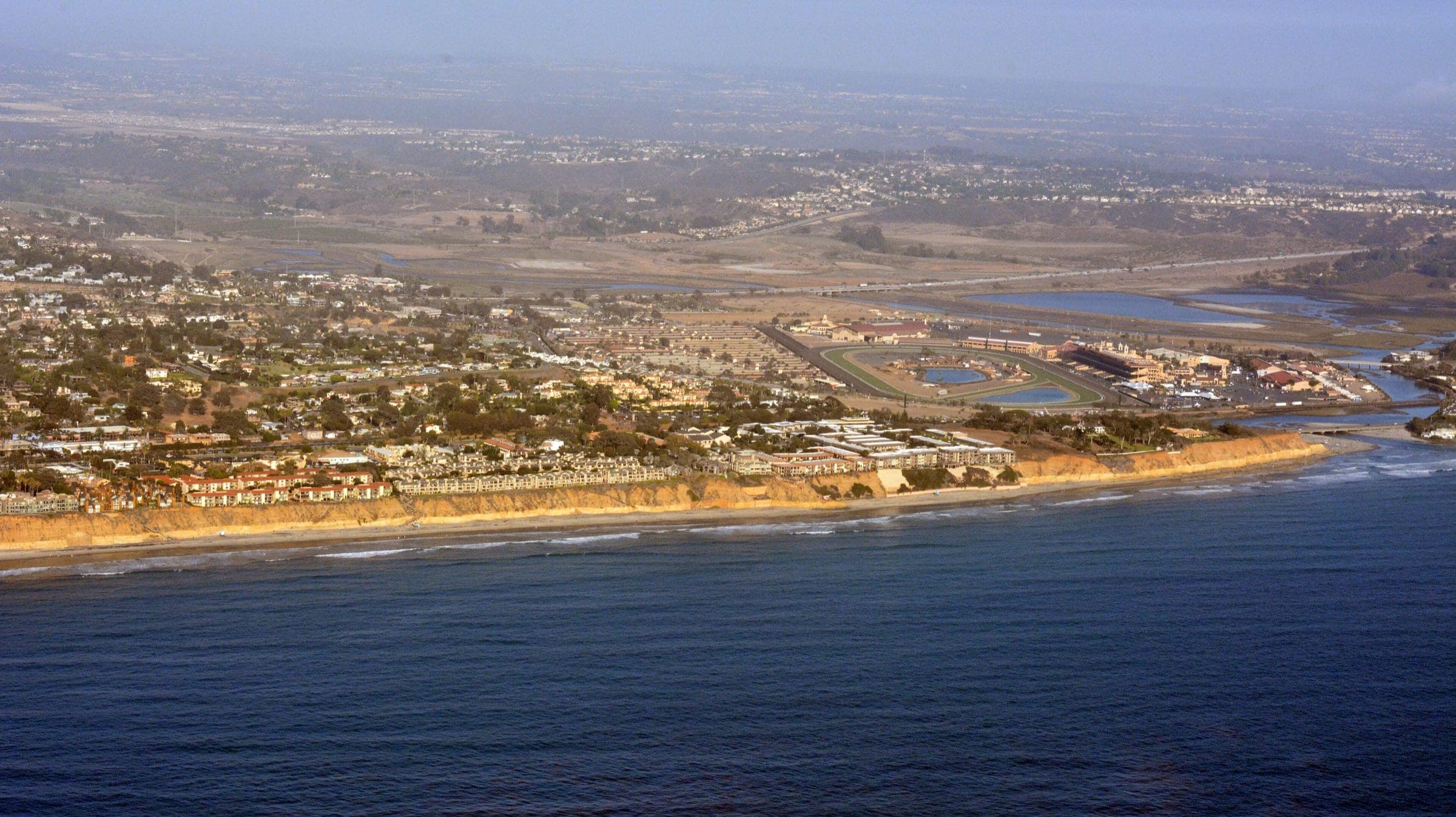
Del Mar
Garage coatings and concrete resurfacing for Del Mar and Solana Beach, with moisture testing for low-lying slabs and UV-stable topcoats for salt air.
Epoxy floors in Del Mar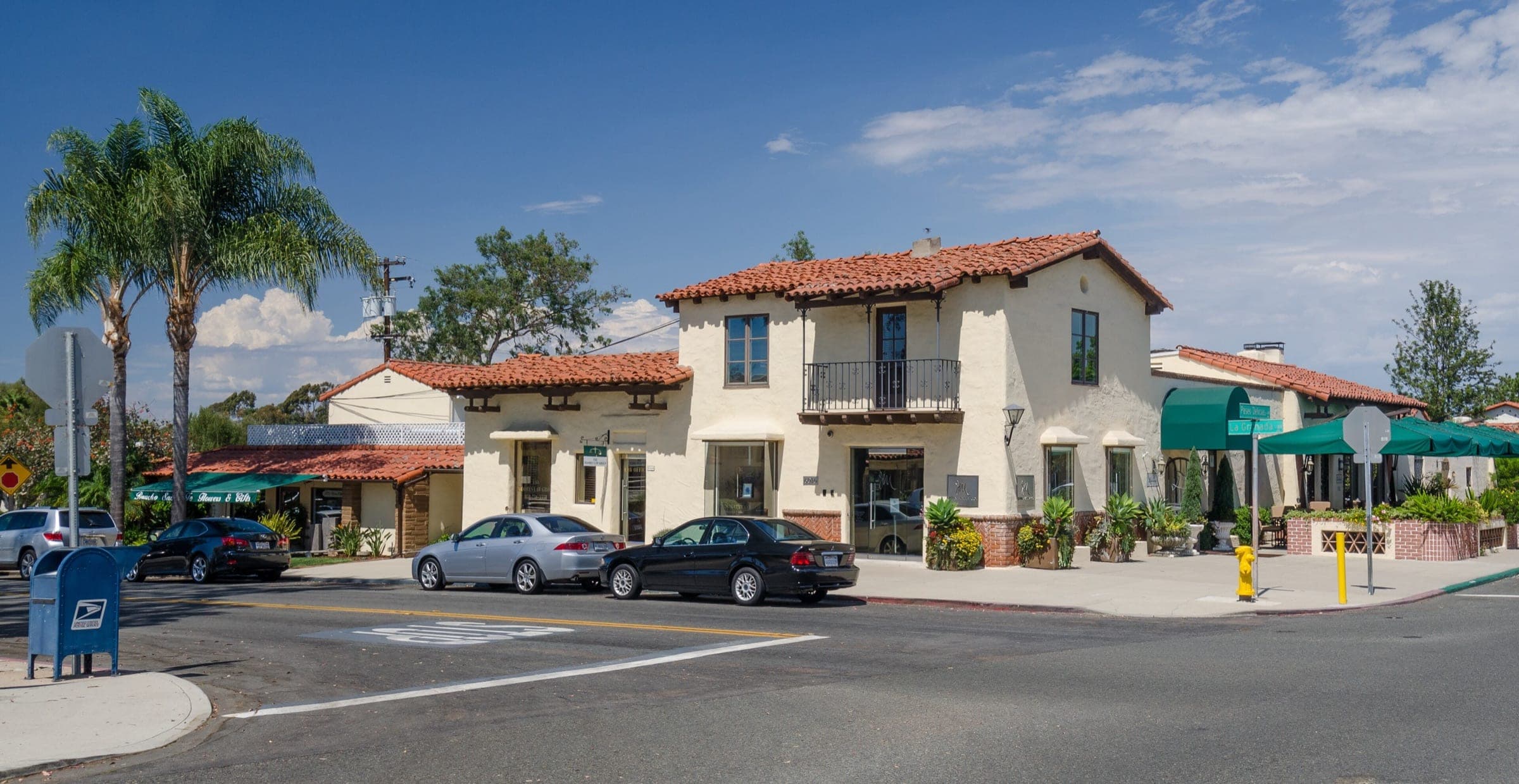
Rancho Santa Fe
Garage floor epoxy, metallic finishes and pool deck resurfacing for Rancho Santa Fe estates, with prep for inland heat and product details for Art Jury review.
Epoxy floors in Rancho Santa Fe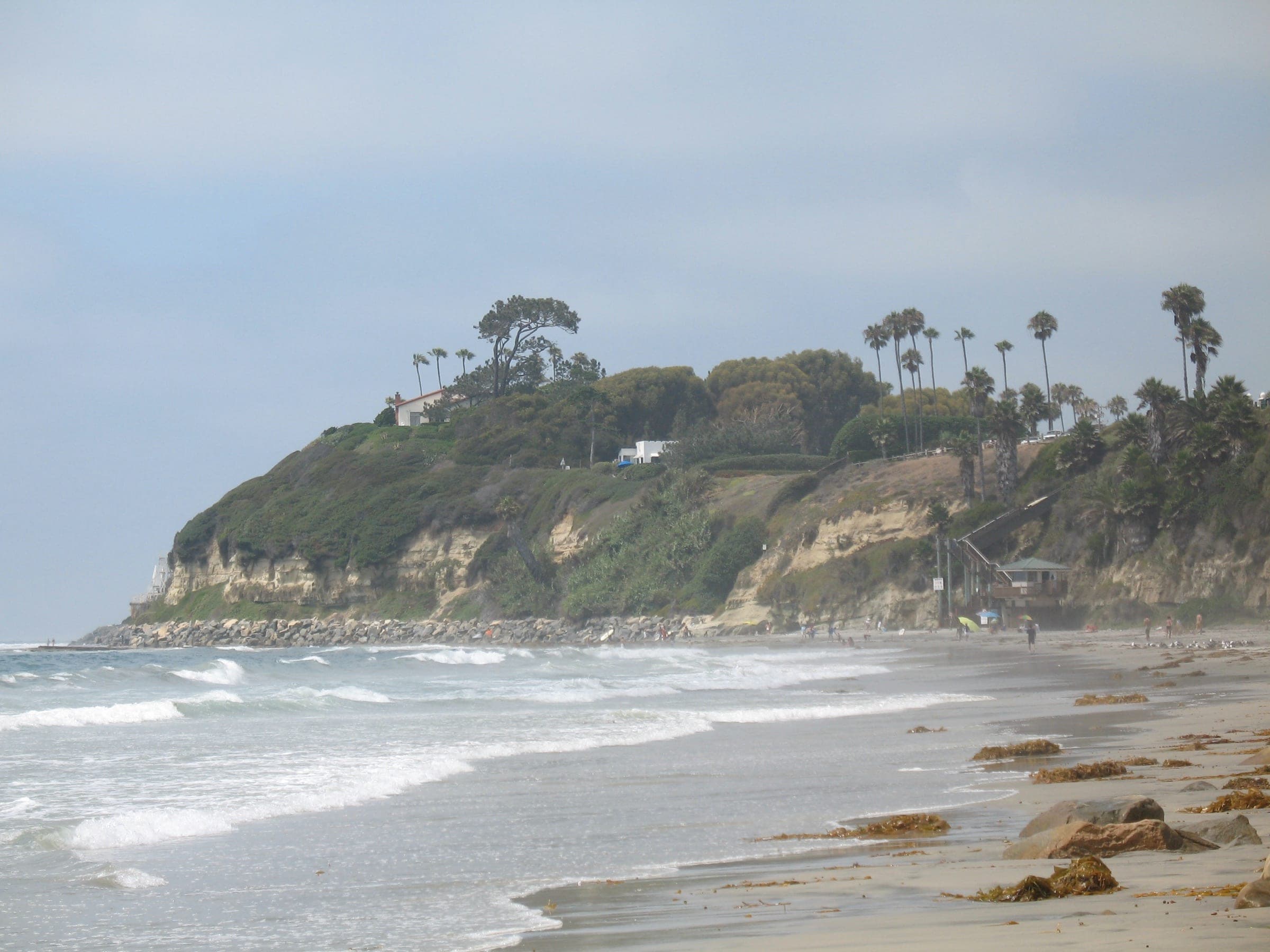
Encinitas
Encinitas garage, patio, and pool deck coatings matched to each community: salty bluff-top air in Leucadia and Cardiff, stronger sun in Olivenhain.
Epoxy floors in Encinitas
Carlsbad
Garage floor systems for La Costa, Aviara, Bressi Ranch, and the Village, plus commercial epoxy and polished concrete for Carlsbad's business parks.
Epoxy floors in Carlsbad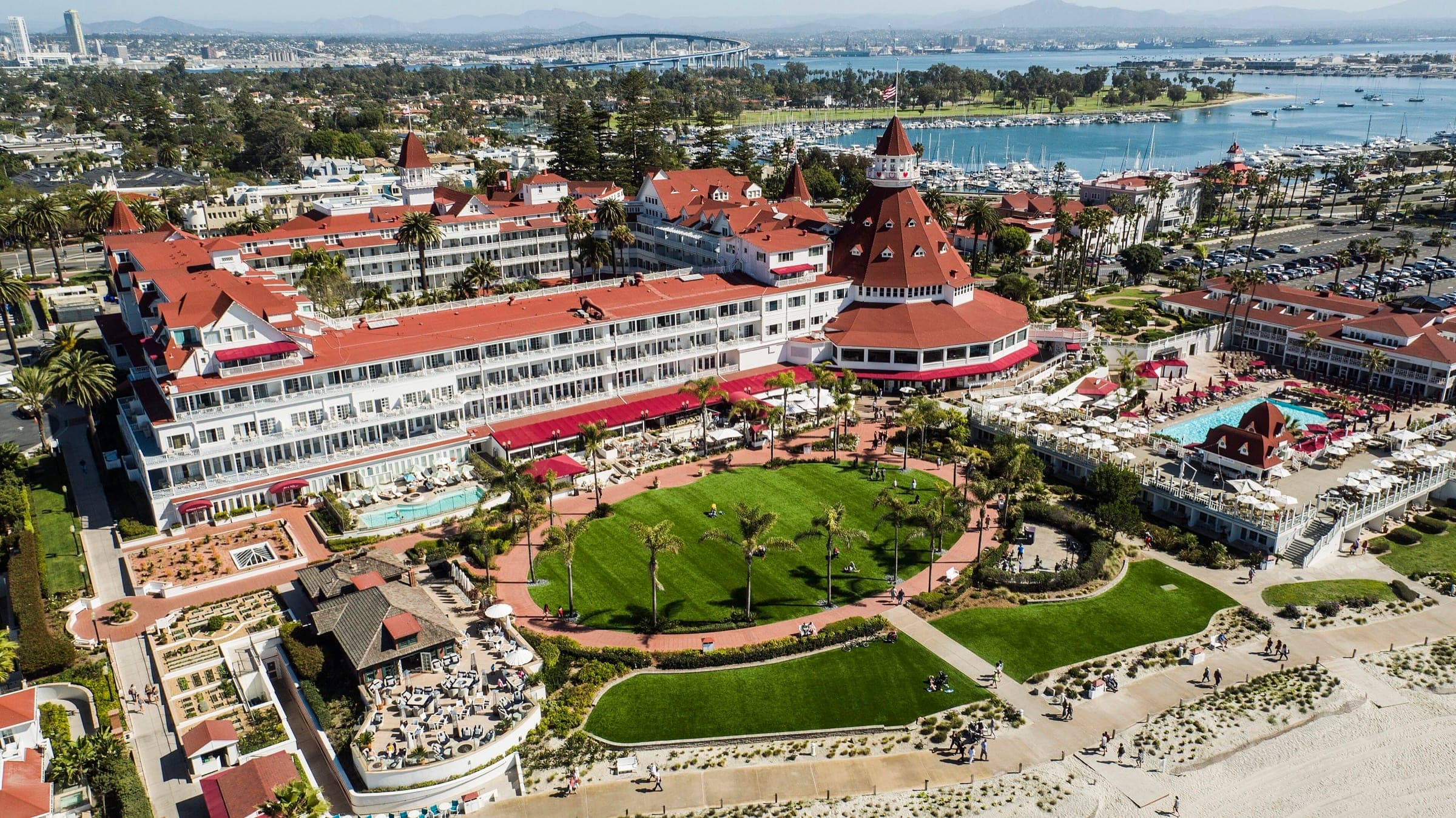
Coronado
UV-stable, moisture-tested floor systems for Coronado's alley garages, bayfront Cays homes, and salt-weathered patios and courtyards.
Epoxy floors in Coronado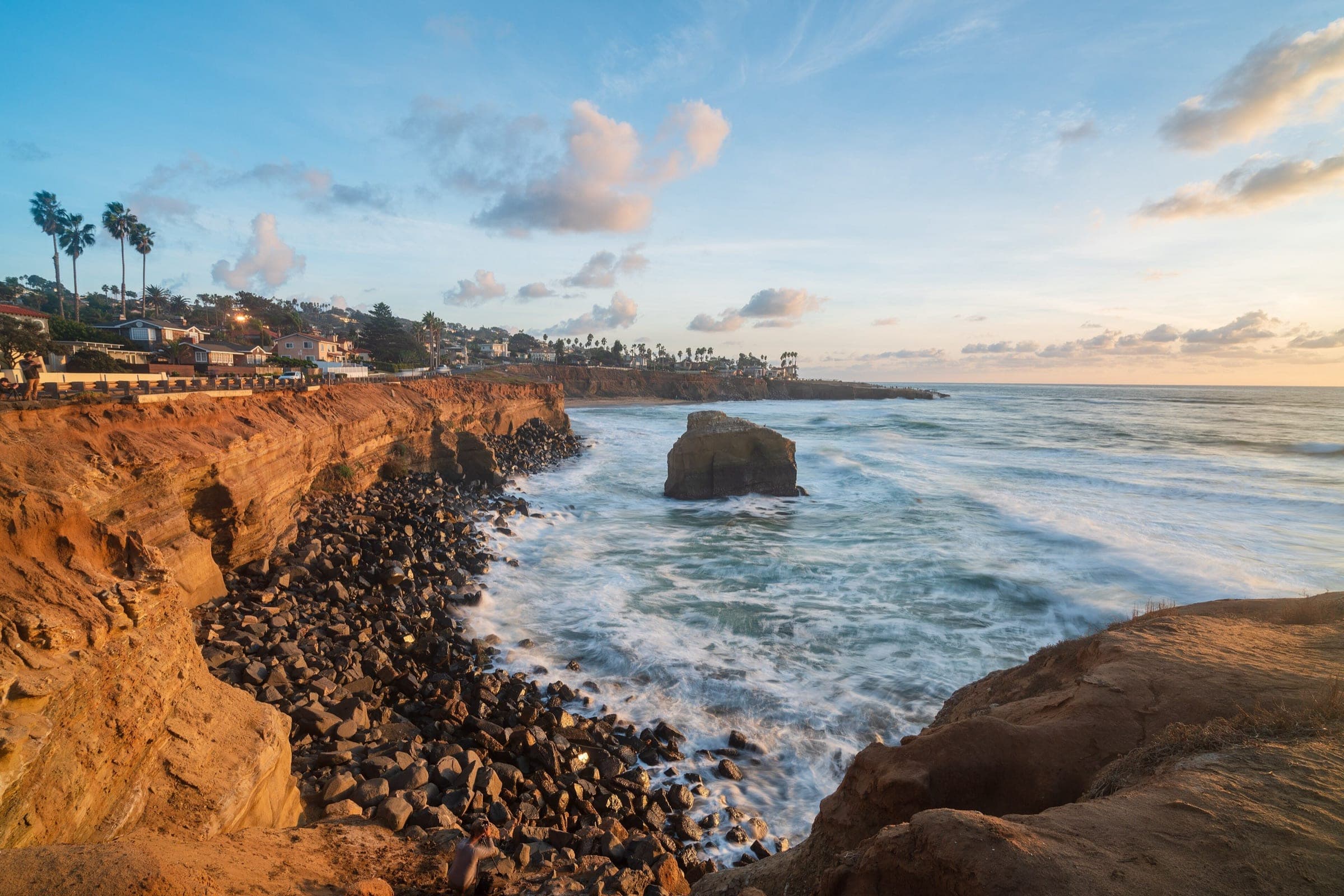
Point Loma
Coatings for Point Loma garages, driveways, and patios, from Sunset Cliffs and the Wooded Area to La Playa and Fleetridge, built for salt air and slopes.
Epoxy floors in Point Loma
Get a concrete polishing estimate
Tell us about the space. We will inspect the slab, test for moisture, and recommend the right system with a written estimate.