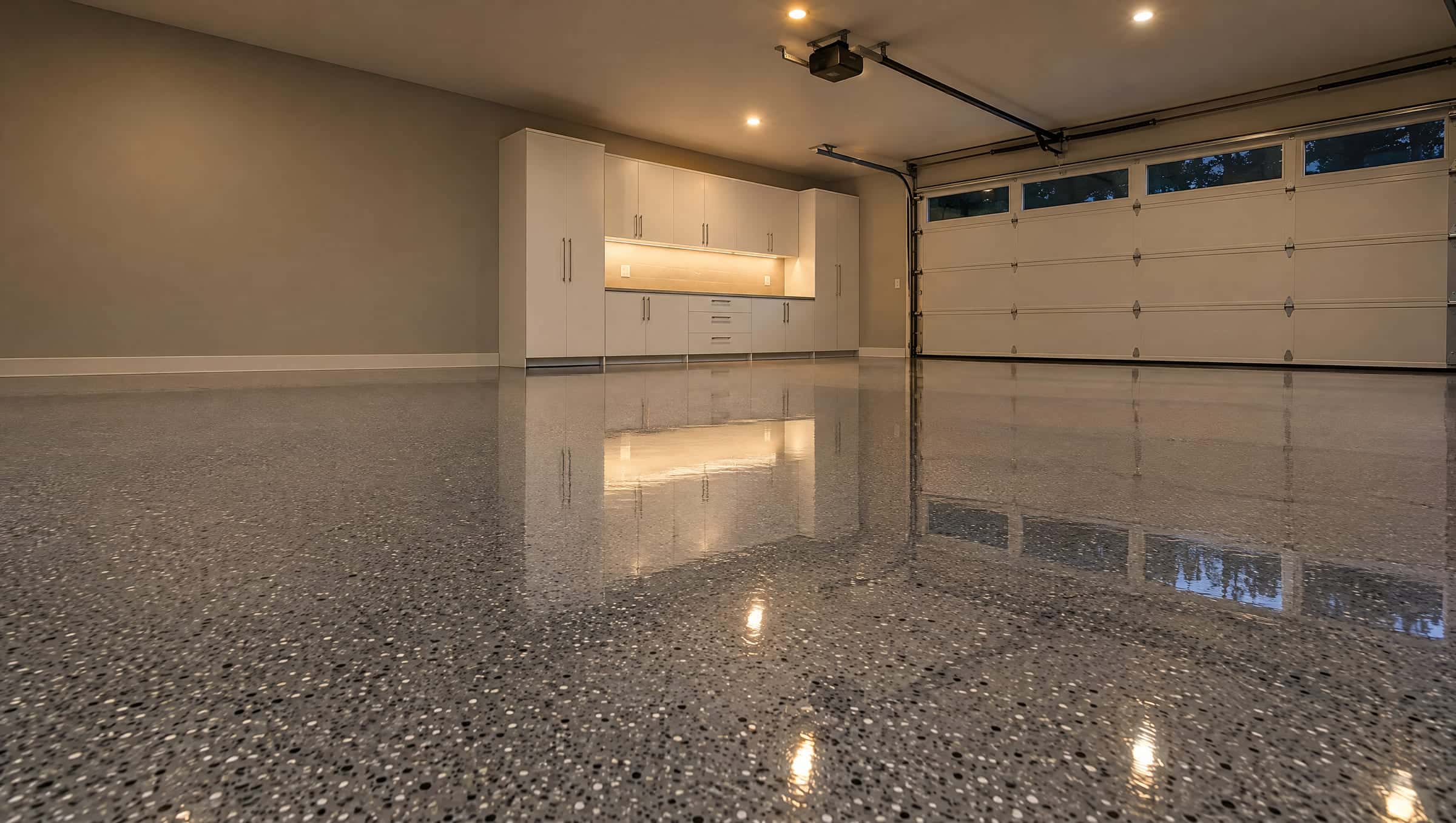
How Much Does an Epoxy Garage Floor Cost in San Diego?
Most San Diego epoxy garage floors run about $5 to $8 per square foot installed. Here are typical ranges by system and garage size, and what moves the price.
- Free on-site estimateMoisture test included
- Diamond-ground prepBonds into the slab
- UV-stable topcoatsBuilt for coastal sun
- Carlsbad to CoronadoService area
Typical cost of an epoxy garage floor in San Diego
The typical epoxy garage floor cost in San Diego is $5 to $8 per square foot, installed. For a two-car garage of 400 to 500 square feet, that works out to about $2,000 to $4,000. The range assumes a sound slab, diamond grinding, minor crack repair, a base coat with full-broadcast flake and a clear UV-stable topcoat.
Prices climb with the system and the condition of the concrete. Full polyaspartic systems typically run $6 to $10 per square foot and metallic epoxy $8 to $15. Moisture mitigation, heavy crack or spall repair, and removing an old coating add to any of them. The cheapest quotes usually leave out the prep that makes a coating last.
These are typical San Diego ranges, not a price list. Local labor and material costs tend to run above national averages, so national figures you find online often look lower. A firm number comes after an on-site inspection and moisture test, and the estimate is free.
Price per square foot by floor system
| System | Typical per sq ft | Notes |
|---|---|---|
| Epoxy flake garage system | $5–$8 | Epoxy or polyurea base, full-broadcast flake and a clear topcoat. The most common garage system: it hides dust and wear and adds texture underfoot. |
| Polyaspartic or polyurea system | $6–$10 | UV-stable and fast-curing, often finished in one or two days. A strong fit for open, sunny garages and coastal homes. |
| Metallic epoxy | $8–$15 | Metallic pigments worked by hand under a high-gloss topcoat. No two floors match. Best indoors or in closed garages. |
| Polished concrete | $4–$12 | A grind and seal sits at the low end; higher gloss and exposed aggregate cost more. Needs a sound slab, because polishing reveals what is there. |
| Concrete resurfacing and overlays | $4–$12 | Polymer-modified micro-toppings and spray knockdown textures for patios, walkways and driveways. Stamped and multi-color overlays can run $12 to $20 or more. |
| Pool deck resurfacing | $5–$12 | Spray textures, heat-reducing coatings or polyurea systems over repaired concrete. Deck size, cracking and drain details set where you land. |
| Commercial epoxy and urethane cement | $4–$15 | Large warehouses fall near the low end. Quartz broadcast floors and urethane cement for commercial kitchens sit near the top. Priced per project. |
What a garage floor typically costs by size
| Size | Square feet | Typical range |
|---|---|---|
| 1-car garage | 250–300 sq ft | $1,300–$2,400 |
| 2-car garage | 400–500 sq ft | $2,000–$4,000 |
| 3-car garage | 600–750 sq ft | $3,000–$6,000 |
| Large garage or basement | 1,000 sq ft | $5,000–$8,000 |
| Shop, basement or large home | 1,500 sq ft | $7,500–$12,000 |
Garage-size ranges are typical, calculated from the $5 to $8 per square foot range for a standard flake system. We compiled these ranges from published San Diego and Southern California pricing and homeowner-reported quotes from 2025 and 2026. They are not our prices. Small garages may carry a minimum job charge, larger floors often price lower per foot, and polyaspartic or metallic systems scale up from these numbers. Your final price depends on an on-site inspection and moisture test.
Cost factors
- 01
Slab condition
Cracks, spalls, pitting and old patches all need repair before coating. A clean, sound slab sits at the low end of the range. A heavily cracked or pitted slab needs more filler, more grinding and more time, and the price per square foot rises with it.
- 02
Moisture in the slab
If a calcium chloride or relative humidity test shows high vapor emissions, the floor needs a moisture-mitigating primer under the base coat. That adds material and a coat of labor. Near the coast, and on older slabs, it is often what keeps a coating bonded instead of blistering.
- 03
Existing coatings and sealers
Old paint, sealer or failed epoxy has to come off before a new system can bond. Grinding through a previous coating takes extra passes and wears through diamond tooling faster, so it adds to the prep cost. Bare concrete is the cheapest starting point.
- 04
System choice
A flake system with an epoxy base and clear topcoat is the baseline. Full polyaspartic or polyurea systems cost more in material and need experienced hands because they cure fast. Metallic epoxy and quartz broadcast floors take more labor and sit at the top of the range.
- 05
Flake density and finish options
Full-broadcast flake costs more than a light sprinkle, but it hides more, adds texture and wears better. Custom flake blends, an extra topcoat, a satin finish and slip-resistant additives each add a little to the total.
- 06
Square footage
Setting up the grinder, dust collection and materials costs about the same for 250 square feet as for 750. That is why small floors cost more per foot and larger garages, basements and shops usually price lower per square foot.
- 07
Layout and access
Stem walls, steps, floor drains, cove base, built-in cabinets and long runs from the curb all add time. Vertical surfaces such as stem walls are usually priced separately. A clear, empty garage with good access keeps the install efficient.
- 08
Sun and outdoor exposure
Floors that see direct sun, such as open garages, patios and pool decks, need UV-stable topcoats and often a texture additive for grip. Those materials cost more than an interior epoxy topcoat, so a sunny, west-facing coastal garage typically prices higher than a closed interior room of the same size.
Where low bids cut corners
Most coating failures are prep failures. Concrete has to be opened with a diamond grinder to a consistent profile, typically CSP 2 to 3 (about the feel of medium sandpaper), so the base coat can soak in and bond. An acid etch and a pressure wash, the shortcut behind many low quotes, leaves a weak surface that can peel at the garage door or under hot tires.
Thin coats are the second problem. Many low-cost and DIY products are water-based or low in solids, so much of what goes down evaporates and leaves a thin film. A 100% solids epoxy or polyurea base builds real thickness, and thickness is what resists abrasion, dropped tools and hot-tire pickup.
Skipping the moisture test is the third. Older slabs, some poured without a vapor barrier underneath, can push moisture up through the concrete. A coating that traps that vapor tends to bubble and lift, sometimes within months. Testing first and priming when needed costs far less than grinding off a failed floor and starting again.
Finally, plain epoxy without a UV-stable topcoat yellows in the sun. In an open garage that faces west or south, an untopcoated floor can amber noticeably within a season or two. A polyaspartic or polyurea topcoat costs more up front and keeps the color true.
A low bid that leaves out grinding, moisture testing, film thickness or a UV-stable topcoat is pricing a different floor. When you compare quotes, line them up on those four items: how the slab is prepared, whether it is tested for moisture, which base coat goes down and how thick, and what the topcoat is. A quote that answers all four clearly is the one worth comparing on price.
DIY kit or professional system?
What a DIY kit costs
Basic big-box epoxy kits typically cost $100 to $300 for a two-car garage. Thicker, pro-grade kits run roughly $1 to $2.50 per square foot in material, plus rented equipment. The savings are real if the slab is sound and dry and you accept a thinner, shorter-lived coat.
Where DIY falls short
Most kits rely on acid etching instead of diamond grinding, skip the moisture test and lay down a thin film. Hot-tire pickup, peeling at the door and yellowing are the common results, and grinding off a failed coating adds cost to the next floor.
What a professional install adds
Diamond grinding with dust collection, moisture testing, crack and spall repair, a 100% solids or polyurea base, full-broadcast flake and a UV-stable topcoat. Fast-curing polyaspartics also take experience, because the working time is short.
When DIY makes sense
A workshop floor you don't mind redoing, a dry interior slab or a quick refresh before a sale. For a garage you park in every day, or a coastal home with sun on the floor, a professional system is usually the better value over its life.
Epoxy floor cost questions
Explore the systems behind these prices
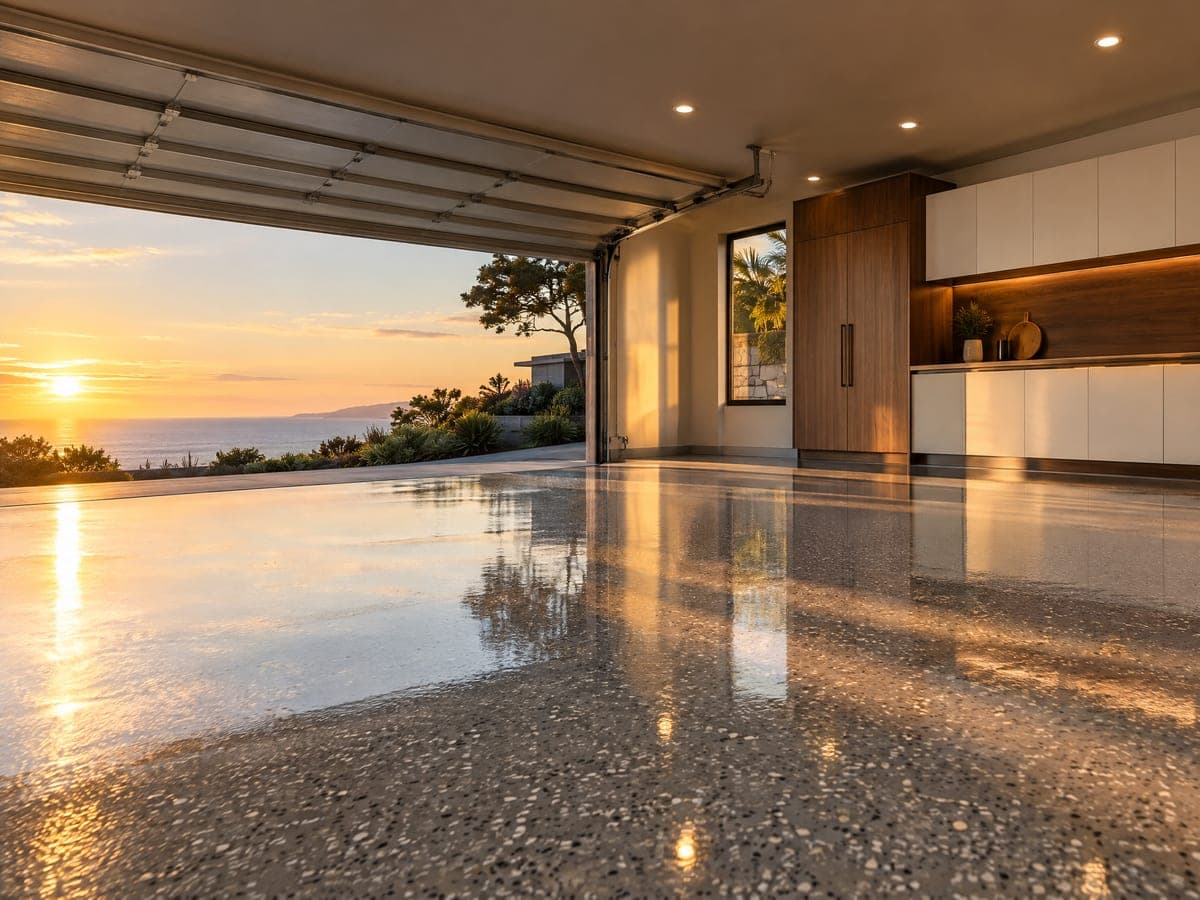
Garage Floor Epoxy
Diamond-ground, multi-layer garage floor systems with flake or metallic finishes and a UV-stable topcoat, built for coastal sun, salt air, and hot tires.
Learn more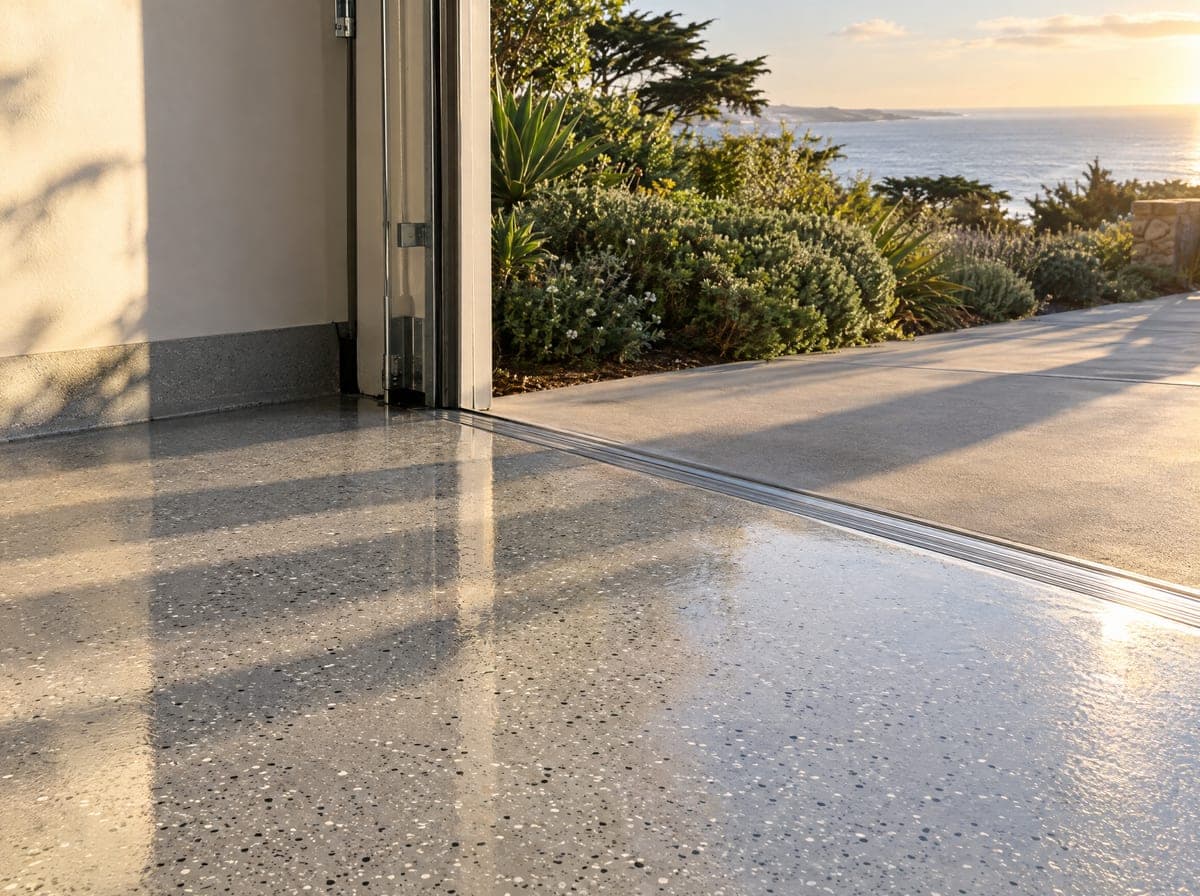
Polyaspartic Coatings
UV-stable, fast-curing polyaspartic topcoats and full systems that hold their color in open, sunlit garages and return to service in a day or two.
Learn more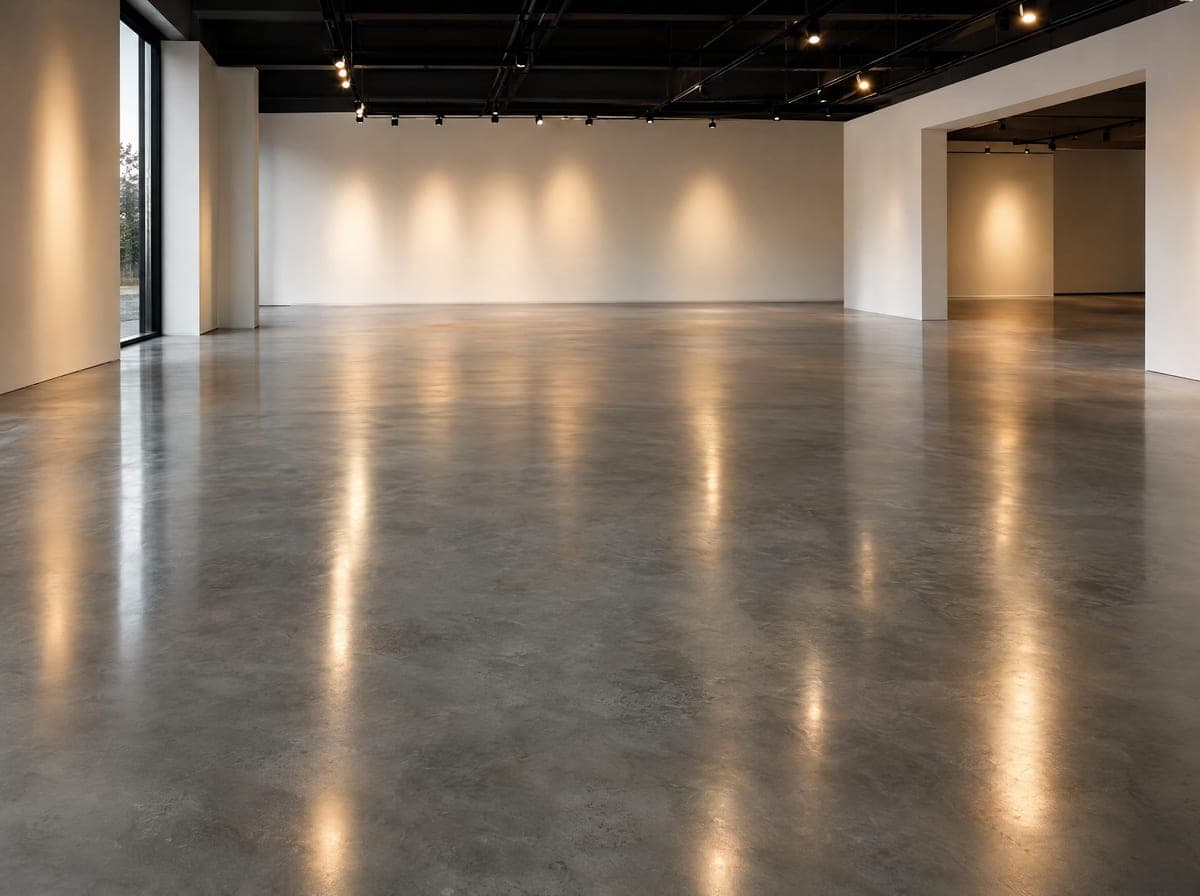
Concrete Polishing
Diamond-ground, densified, and guarded concrete floors from matte to high gloss for modern homes, ADUs, garages, showrooms, retail, and warehouses.
Learn moreGet your exact epoxy garage floor cost
Ranges only go so far. Send a few photos and the rough size of the space, and we will schedule an inspection and moisture test, then give you a free written estimate with each system option priced side by side.